Sump Pump Battery Backup: Will a Power Station Run It?
How much battery a 1/3 or 1/2 HP sump pump needs through a storm, why starting watts decide it, and when a dedicated backup pump is the better buy.
Updated October 27, 2026 · By the OutageWatt team · How we calculate
In short
Some links on this page are affiliate links: we may earn a commission if you buy, at no extra cost to you. It never changes a runtime or a pick. How we make money.
Why the pump is the hard part
A sump pump is a motor that starts, runs hard for a minute or two, stops, and starts again whenever the pit refills. Each start pulls about three times its running power. That is fine for the grid and deadly for a small inverter: a 1,000 W station without enough surge headroom simply trips when the float switch closes, usually at 3 a.m. in the worst of the rain.
The second thing people get wrong is hours. The pump doesn't run all day. What matters is its duty: how many minutes per hour it actually pumps. Watch it during the next heavy rain with the grid still on: if it cycles every 6 minutes for 1 minute, that is 10 minutes an hour.
Every station, one 1/2 HP pump at 4 hours a day
| Power station | Capacity | Runs it? | Runtime | Price |
|---|---|---|---|---|
| Jackery Explorer 1000 v2 | 1.1 kWh | Can't start it | — | $499 |
| EcoFlow DELTA 3 Plus | 1.0 kWh | Yes | 5.1 h | $719 |
| Anker SOLIX C1000 Gen 2 | 1.0 kWh | Can't start it | — | $499.99 |
| BLUETTI AC180 | 1.2 kWh | Surge not published | — | $499 |
| Anker SOLIX F2000 | 2.0 kWh | Surge not published | — | $1,999 |
| Jackery HomePower 2000 Plus v2 | 2.0 kWh | Yes | 10 h | $1,069 |
| Jackery HomePower 3600 Plus | 3.6 kWh | Yes | 18 h | $1,709 |
| BLUETTI Apex 300 | 2.8 kWh | Yes | 14 h | $1,599 |
| Anker SOLIX F3800 Plus | 3.8 kWh | Yes | 19 h | $2,399.99 |
| EcoFlow DELTA Pro 3 | 4.1 kWh | Yes | 21 h | $2,799 |
| Jackery HomePower 3600 Pro Max | 3.6 kWh | Yes | 18 h | $1,799 |
| Jackery Explorer 5000 Plus | 5.0 kWh | Yes | 25 h | $3,149 |
Pump, fridge, Wi-Fi and lights together
Most people want more than a dry basement. Add a fridge, the router and some lights and the list needs 1.8 kW if everything runs at once and 4.0 kW at the worst moment, about 5.8 kWh a day.
| Power station | Capacity | Runs it? | Runtime | Price |
|---|---|---|---|---|
| Jackery Explorer 1000 v2 | 1.1 kWh | Output too low | — | $499 |
| EcoFlow DELTA 3 Plus | 1.0 kWh | Output too low | — | $719 |
| Anker SOLIX C1000 Gen 2 | 1.0 kWh | Can't start it | — | $499.99 |
| BLUETTI AC180 | 1.2 kWh | Output too low | — | $499 |
| Anker SOLIX F2000 | 2.0 kWh | Surge not published | — | $1,999 |
| Jackery HomePower 2000 Plus v2 | 2.0 kWh | Yes | 7.4 h | $1,069 |
| Jackery HomePower 3600 Plus | 3.6 kWh | Yes | 13 h | $1,709 |
| BLUETTI Apex 300 | 2.8 kWh | Surge not published | — | $1,599 |
| Anker SOLIX F3800 Plus | 3.8 kWh | Yes | 14 h | $2,399.99 |
| EcoFlow DELTA Pro 3 | 4.1 kWh | Yes | 15 h | $2,799 |
| Jackery HomePower 3600 Pro Max | 3.6 kWh | Yes | 13 h | $1,799 |
| Jackery Explorer 5000 Plus | 5.0 kWh | Yes | 18 h | $3,149 |
Connecting it
Most sump pumps plug into a single outlet near the pit, so the simplest setup is a heavy extension cord from the station to the pump. Use a cord rated for the pump's current (12 or 14 gauge, short) and keep the station dry and off the basement floor. For automatic switch-over, the station has to feed the pump's circuit through a transfer switch, or you can add a dedicated battery backup pump next to the main one.
Stations with the surge to start a pump
Picked from the makers' published specs and US store prices, checked October 28, 2026. We haven't tested them ourselves, and we may earn a commission if you buy through these links, at no extra cost to you. The full comparison is on our power station page.
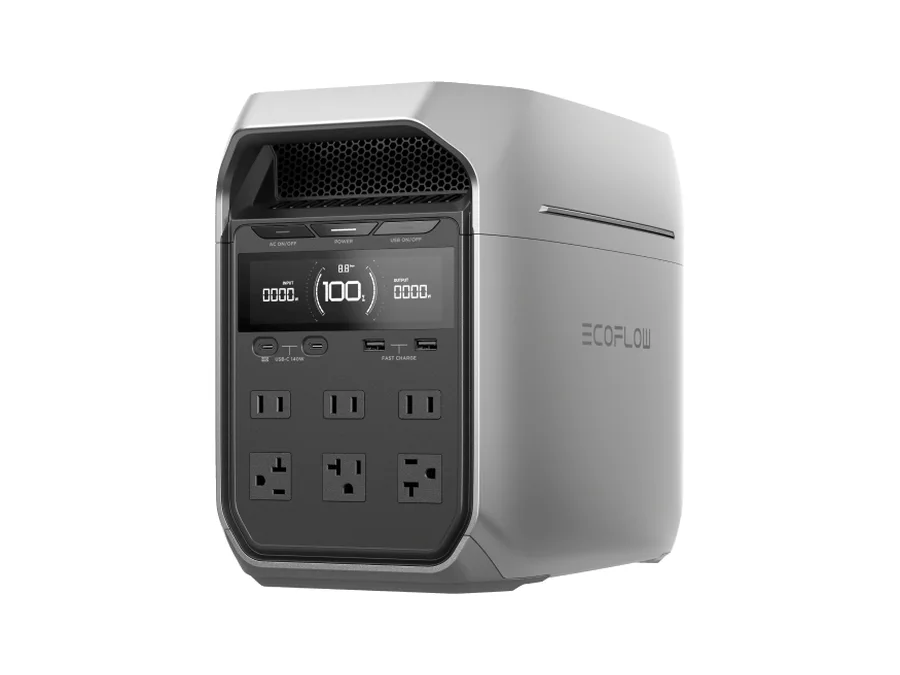
EcoFlow
DELTA 3 Plus
Recharges from the wall in under an hour and grows to about 5 kWh with one extra battery: a good start if you plan to add later.
- Capacity
- 1.0 kWh
- Output
- 1.8 kW
- Surge
- 3.6 kW
- Solar in
- 1.0 kW
- Weight
- 27.6 lb†
- Warranty
- 5 yr
† reported by retailers or reviews, not yet confirmed on EcoFlow's spec sheet.
$719pre-order price, October 28, 2026
Check price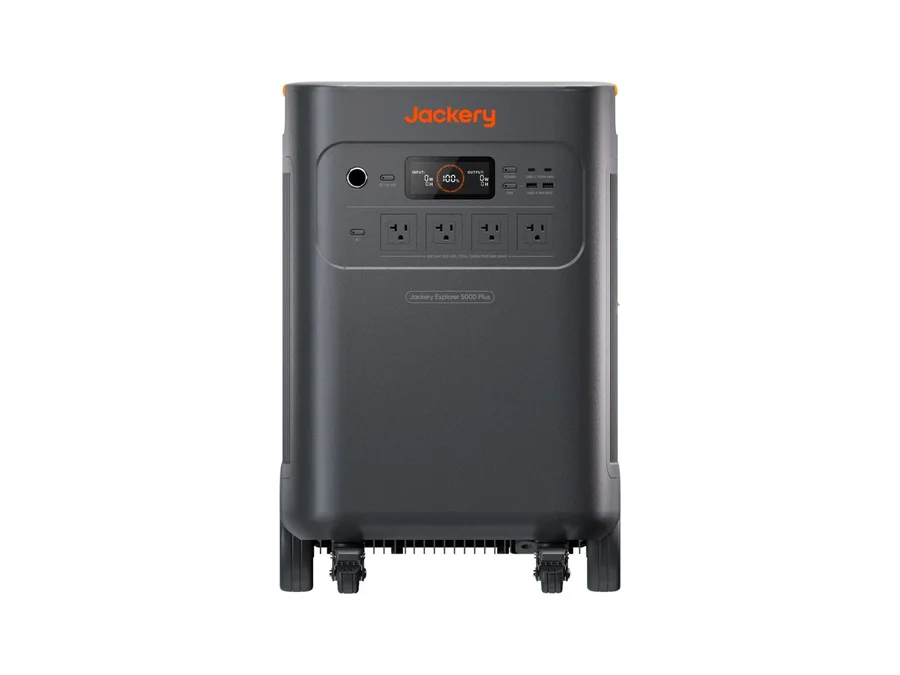
Jackery
Explorer 5000 Plus
The strongest starting power we list (14.4 kW): central AC and well pumps start where smaller units trip. Grows to about 30 kWh with five Battery Pack 5000 Plus; solar figure is the low-voltage input.
- Capacity
- 5.0 kWh
- Output
- 7.2 kW · 240 V
- Surge
- 14 kW
- Solar in
- 1.2 kW
- Weight
- 134.5 lb
- Warranty
- 5 yr
$3,149unit alone, without panels or extra battery, October 28, 2026
Check priceFrequently asked questions
How long will a power station run a sump pump?
It depends on how often the pump runs, not on the clock. A 1/2 HP pump draws about 1,050 W while pumping. If it pumps 10 minutes an hour through a storm (4 hours a day), every 1,000 Wh of battery covers about 5.0 h.
Can a 1,000 W power station run a 1/2 HP sump pump?
Usually not: the pump needs about 1,050 W running and about 3,200 W for a moment to start. Look for at least 1,500 W of output and a published surge of 3,200 W or more.
Is a dedicated battery backup sump pump better?
For the basement alone, often yes: a second pump with its own battery switches on automatically when the main one stops. A power station is more flexible (it also runs the fridge and Wi-Fi) but the pump must be plugged into it by hand unless you install a transfer switch.
Free tool
Plan the storm night
Sump pump, fridge, Wi-Fi and lights, hour by hour.
OutageWatt is independent and not affiliated with any brand named here. Specs come from makers' spec sheets and are dated; anything wired into your home needs a licensed electrician and a transfer switch or interlock. Never backfeed through an outlet.