Well Pump Backup Power: 240 V, Surge and How Much Battery
Most well pumps run on 240 V and kick hard at start-up. Which power stations and home batteries can run one, and how many days of water you get.
Updated October 27, 2026 · By the OutageWatt team · How we calculate
In short
Some links on this page are affiliate links: we may earn a commission if you buy, at no extra cost to you. It never changes a runtime or a pick. How we make money.
No water is the real emergency
On a well, losing power means losing water: no flushing, no washing, no drinking water once the pressure tank empties. That makes the pump the first circuit to plan for, and the hardest one, for two reasons.
First, voltage. A 120 V power station, however big, can't power a 240 V pump. You need a unit with split-phase 120/240 V output (several in our list), two units linked together, or a home battery. Second, start-up. A pump motor sitting at the bottom of a well starts against the full column of water and pulls two to three times its running watts to do it.
Which power stations can run it
| Power station | Capacity | Runs it? | Runtime | Price |
|---|---|---|---|---|
| Jackery Explorer 1000 v2 | 1.1 kWh | No 240 V | — | $499 |
| EcoFlow DELTA 3 Plus | 1.0 kWh | No 240 V | — | $719 |
| Anker SOLIX C1000 Gen 2 | 1.0 kWh | No 240 V | — | $499.99 |
| BLUETTI AC180 | 1.2 kWh | No 240 V | — | $499 |
| Anker SOLIX F2000 | 2.0 kWh | No 240 V | — | $1,999 |
| Jackery HomePower 2000 Plus v2 | 2.0 kWh | No 240 V | — | $1,069 |
| Jackery HomePower 3600 Plus | 3.6 kWh | No 240 V | — | $1,709 |
| BLUETTI Apex 300 | 2.8 kWh | Surge not published | — | $1,599 |
| Anker SOLIX F3800 Plus | 3.8 kWh | Yes | 23 h | $2,399.99 |
| EcoFlow DELTA Pro 3 | 4.1 kWh | Yes | 25 h | $2,799 |
| Jackery HomePower 3600 Pro Max | 3.6 kWh | Yes | 22 h | $1,799 |
| Jackery Explorer 5000 Plus | 5.0 kWh | Yes | 30 h | $3,149 |
These figures use a 1/2 HP pump from Generac's sizing chart. Deeper wells often have 3/4 or 1 HP pumps: DTE Energy lists 1,500 W running for 3/4 HP, and 1 HP pumps can need 4,000 to 6,000 W to start. Type your own pump's watts in the planner.
Home batteries and EVs
| Battery | Usable | Output | Runtime |
|---|---|---|---|
| Tesla Powerwall 3 (1 unit) | 13.5 kWh | 11.5 kW | 3.5 days |
| Enphase IQ Battery 5P (1 unit) | 5.0 kWh | 3.84 kW | 31 h |
| FranklinWH aPower 2 (1 unit) | 15.0 kWh | 10 kW | 3.9 days |
| Tesla Cybertruck (Powershare) | 98.4 kWh | 11.5 kW | 14 days+ |
| Ford F-150 Lightning (Extended Range) | 104.8 kWh | 9.6 kW | 14 days+ |
| Kia EV9 (Long Range) + Wallbox Quasar 2 | 79.8 kWh | 12 kW | 14 days+ |
Every home battery here delivers 240 V natively. With a well, the pressure tank does you a favor: the pump runs in short bursts, so energy use stays low even if the start-up peak is high. A Powerwall 3 is rated to start motors drawing up to 185 locked-rotor amps, well above a typical 1/2 to 1 HP pump.
Connecting it safely
A 240 V pump is hard-wired, so backup power reaches it through a transfer switch or interlock installed by a licensed electrician. Never use a double-ended “suicide cord” to feed a dryer outlet: it puts lethal voltage on the plug you are holding and on the utility lines.
120/240 V stations for a well pump
Picked from the makers' published specs and US store prices, checked October 28, 2026. We haven't tested them ourselves, and we may earn a commission if you buy through these links, at no extra cost to you. The full comparison is on our power station page.
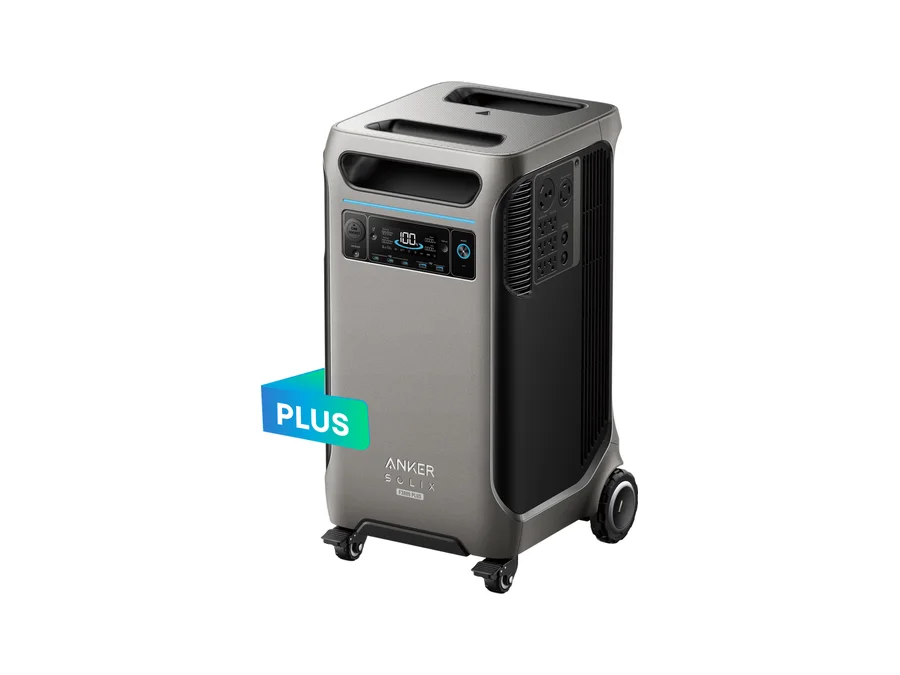
Anker SOLIX
F3800 Plus
6,000 W at 240 V runs a well pump and most circuits through a transfer switch; six expansion batteries per unit.
- Capacity
- 3.8 kWh
- Output
- 6.0 kW · 240 V
- Surge
- not published
- Solar in
- 3.2 kW
- Weight
- 136.7 lb
- Warranty
- 5 yr
$2,399.99after on-site coupon, October 28, 2026
Check price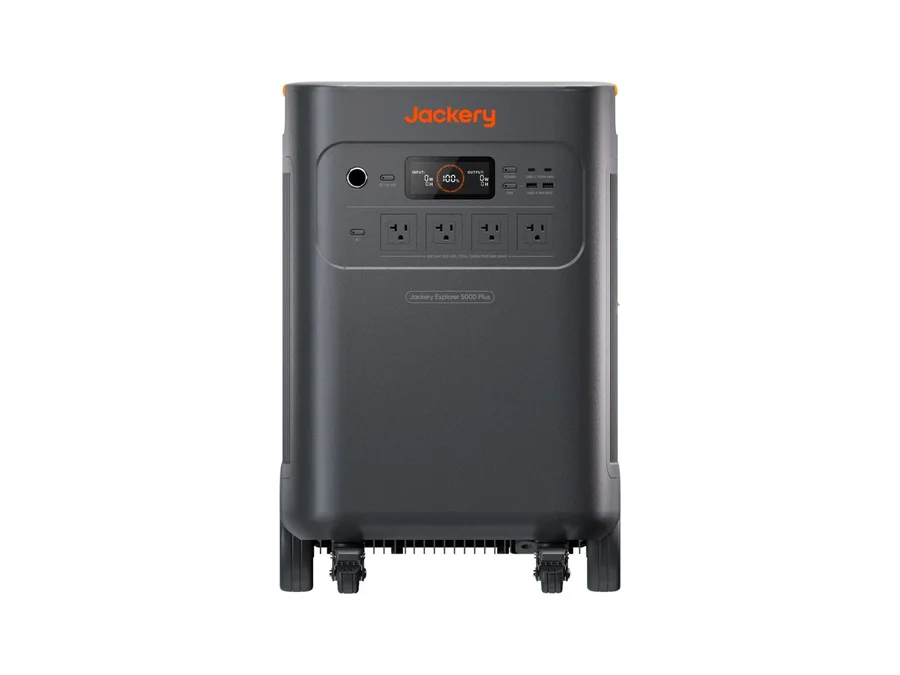
Jackery
Explorer 5000 Plus
The strongest starting power we list (14.4 kW): central AC and well pumps start where smaller units trip. Grows to about 30 kWh with five Battery Pack 5000 Plus; solar figure is the low-voltage input.
- Capacity
- 5.0 kWh
- Output
- 7.2 kW · 240 V
- Surge
- 14 kW
- Solar in
- 1.2 kW
- Weight
- 134.5 lb
- Warranty
- 5 yr
$3,149unit alone, without panels or extra battery, October 28, 2026
Check priceFrequently asked questions
Can a portable power station run a well pump?
Only one with 240 V output and enough surge. Most submersible well pumps run on 240 V and need about 3,000 W or more for a moment to start. Standard 120 V power stations can't run them at all, whatever their capacity.
How much battery does a well pump need per day?
A 1/2 HP pump drawing about 1,000 W for an hour and a half of pumping uses about 1.5 kWh a day. Showers, laundry and irrigation add pumping time; toilets and drinking water alone use far less.
Is my well pump 120 V or 240 V?
Look at the breaker in your panel: a double-pole breaker (two switches tied together) means 240 V. The pump's control box or the label on the pressure switch also lists the voltage.
Free tool
Plan your rural outage
Well pump, freezer and fridge for three days, with solar if you have it.
OutageWatt is independent and not affiliated with any brand named here. Specs come from makers' spec sheets and are dated; anything wired into your home needs a licensed electrician and a transfer switch or interlock. Never backfeed through an outlet.